Your pregnancy - week 24
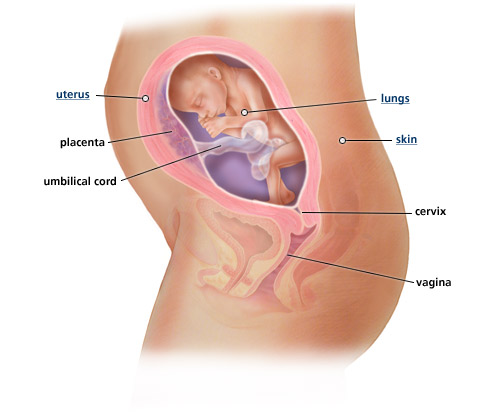
You are now 24 weeks pregnant and at the beginning of week 25.
Your baby has grown to be about 30 cm long from head to toe (11.75 inches) and approximately 700 grams in weight (just over 1 lb 8 oz).
Your baby may now be big enough for others to feel your belly and sense them kicking and stretching!
Babies at 24 weeks have been noted to increase their breathing patterns (by expanding their lungs with amniotic fluid), after their mothers eat, especially if the food contains sugar! Your baby's lungs now start to produce a substance called surfactant, which lines their lungs and assists them to breathe after birth.
Physical changes
Breathlessness
Many women complain of feeling breathless during pregnancy. This is very normal and usually comes and goes. You can be short of breath even while sitting and having a normal conversation.
Palpitations
This is a feeling that your heart is 'racing' or beating strongly and rapidly in your chest. Palpitations are very common during pregnancy, due to the extra workload on the heart pumping up to 50% more blood volume around your body. Palpitations can be felt for no apparent reason, but may be associated with exercising, being stressed, feeling anxious or excited. They usually subside on their own after a few minutes or less. Palpitations may also be associated with feeling breathless.
NOTE: Occasionally palpitations can indicate a heart condition. If you are concerned that they are not going away and you are feeling unwell, contact your caregiver.
Emotional reactions
Many women have vivid or scary dreams during their pregnancy. These may involve being abandoned or losing their partner, giving birth to a baby who has an abnormality, having a 'painless' birth and discovering the gender of their child or experiencing an out of control situation. The things that you dream about are not likely to merge into reality when the time comes, but they may reflect some unconscious concerns you have.
Other considerations
Water birth
In recent years water births have become more mainstream. Many hospitals now have baths installed for women to use warm water for pain relief during labour, with a few hospitals accommodating water births. If you are keen to have your baby in water, ask your caregiver about the possibility of doing this..
Lying on your back
During the later months of pregnancy (after about 24 to 28 weeks), a few women find that if they lie flat on their back for a few minutes or more, they start to feel light-headed, dizzy and possibly breathless and nauseated. This can happen because the growing baby is placing pressure on one of the major blood vessels called the vena cava. However, not every pregnant woman experiences this. Usually lying on your right or left side, sitting in an upright position, or even in a semi-upright position you can avoid vena-caval compression.
Your pregnancy - week 24
You are now 24 weeks pregnant and at the beginning of week 25.
Your baby has grown to be about 30 cm long from head to toe (11.75 inches) and approximately 700 grams in weight (just over 1 lb 8 oz).
Your baby may now be big enough for others to feel your belly and sense them kicking and stretching!
Babies at 24 weeks have been noted to increase their breathing patterns (by expanding their lungs with amniotic fluid), after their mothers eat, especially if the food contains sugar! Your baby's lungs now start to produce a substance called surfactant, which lines their lungs and assists them to breathe after birth.
Physical changes
Breathlessness
Many women complain of feeling breathless during pregnancy. This is very normal and usually comes and goes. You can be short of breath even while sitting and having a normal conversation.
Palpitations
This is a feeling that your heart is 'racing' or beating strongly and rapidly in your chest. Palpitations are very common during pregnancy, due to the extra workload on the heart pumping up to 50% more blood volume around your body. Palpitations can be felt for no apparent reason, but may be associated with exercising, being stressed, feeling anxious or excited. They usually subside on their own after a few minutes or less. Palpitations may also be associated with feeling breathless.
NOTE: Occasionally palpitations can indicate a heart condition. If you are concerned that they are not going away and you are feeling unwell, contact your caregiver.
Emotional reactions
Many women have vivid or scary dreams during their pregnancy. These may involve being abandoned or losing their partner, giving birth to a baby who has an abnormality, having a 'painless' birth and discovering the gender of their child or experiencing an out of control situation. The things that you dream about are not likely to merge into reality when the time comes, but they may reflect some unconscious concerns you have.
Other considerations
Water birth
In recent years water births have become more mainstream. Many hospitals now have baths installed for women to use warm water for pain relief during labour, with a few hospitals accommodating water births. If you are keen to have your baby in water, ask your caregiver about the possibility of doing this..
Lying on your back
During the later months of pregnancy (after about 24 to 28 weeks), a few women find that if they lie flat on their back for a few minutes or more, they start to feel light-headed, dizzy and possibly breathless and nauseated. This can happen because the growing baby is placing pressure on one of the major blood vessels called the vena cava. However, not every pregnant woman experiences this. Usually lying on your right or left side, sitting in an upright position, or even in a semi-upright position you can avoid vena-caval compression.
Your pregnancy - week 24
You are now 24 weeks pregnant and at the beginning of week 25.
Your baby has grown to be about 30 cm long from head to toe (11.75 inches) and approximately 700 grams in weight (just over 1 lb 8 oz).
Your baby may now be big enough for others to feel your belly and sense them kicking and stretching!
Babies at 24 weeks have been noted to increase their breathing patterns (by expanding their lungs with amniotic fluid), after their mothers eat, especially if the food contains sugar! Your baby's lungs now start to produce a substance called surfactant, which lines their lungs and assists them to breathe after birth.
Physical changes
Breathlessness
Many women complain of feeling breathless during pregnancy. This is very normal and usually comes and goes. You can be short of breath even while sitting and having a normal conversation.
Palpitations
This is a feeling that your heart is 'racing' or beating strongly and rapidly in your chest. Palpitations are very common during pregnancy, due to the extra workload on the heart pumping up to 50% more blood volume around your body. Palpitations can be felt for no apparent reason, but may be associated with exercising, being stressed, feeling anxious or excited. They usually subside on their own after a few minutes or less. Palpitations may also be associated with feeling breathless.
NOTE: Occasionally palpitations can indicate a heart condition. If you are concerned that they are not going away and you are feeling unwell, contact your caregiver.
Emotional reactions
Many women have vivid or scary dreams during their pregnancy. These may involve being abandoned or losing their partner, giving birth to a baby who has an abnormality, having a 'painless' birth and discovering the gender of their child or experiencing an out of control situation. The things that you dream about are not likely to merge into reality when the time comes, but they may reflect some unconscious concerns you have.
Other considerations
Water birth
In recent years water births have become more mainstream. Many hospitals now have baths installed for women to use warm water for pain relief during labour, with a few hospitals accommodating water births. If you are keen to have your baby in water, ask your caregiver about the possibility of doing this..
Lying on your back
During the later months of pregnancy (after about 24 to 28 weeks), a few women find that if they lie flat on their back for a few minutes or more, they start to feel light-headed, dizzy and possibly breathless and nauseated. This can happen because the growing baby is placing pressure on one of the major blood vessels called the vena cava. However, not every pregnant woman experiences this. Usually lying on your right or left side, sitting in an upright position, or even in a semi-upright position you can avoid vena-caval compression.
Your pregnancy - week 24
You are now 24 weeks pregnant and at the beginning of week 25.
Your baby has grown to be about 30 cm long from head to toe (11.75 inches) and approximately 700 grams in weight (just over 1 lb 8 oz).
Your baby may now be big enough for others to feel your belly and sense them kicking and stretching!
Babies at 24 weeks have been noted to increase their breathing patterns (by expanding their lungs with amniotic fluid), after their mothers eat, especially if the food contains sugar! Your baby's lungs now start to produce a substance called surfactant, which lines their lungs and assists them to breathe after birth.
Physical changes
Breathlessness
Many women complain of feeling breathless during pregnancy. This is very normal and usually comes and goes. You can be short of breath even while sitting and having a normal conversation.
Palpitations
This is a feeling that your heart is 'racing' or beating strongly and rapidly in your chest. Palpitations are very common during pregnancy, due to the extra workload on the heart pumping up to 50% more blood volume around your body. Palpitations can be felt for no apparent reason, but may be associated with exercising, being stressed, feeling anxious or excited. They usually subside on their own after a few minutes or less. Palpitations may also be associated with feeling breathless.
NOTE: Occasionally palpitations can indicate a heart condition. If you are concerned that they are not going away and you are feeling unwell, contact your caregiver.
Emotional reactions
Many women have vivid or scary dreams during their pregnancy. These may involve being abandoned or losing their partner, giving birth to a baby who has an abnormality, having a 'painless' birth and discovering the gender of their child or experiencing an out of control situation. The things that you dream about are not likely to merge into reality when the time comes, but they may reflect some unconscious concerns you have.
Other considerations
Water birth
In recent years water births have become more mainstream. Many hospitals now have baths installed for women to use warm water for pain relief during labour, with a few hospitals accommodating water births. If you are keen to have your baby in water, ask your caregiver about the possibility of doing this..
Lying on your back
During the later months of pregnancy (after about 24 to 28 weeks), a few women find that if they lie flat on their back for a few minutes or more, they start to feel light-headed, dizzy and possibly breathless and nauseated. This can happen because the growing baby is placing pressure on one of the major blood vessels called the vena cava. However, not every pregnant woman experiences this. Usually lying on your right or left side, sitting in an upright position, or even in a semi-upright position you can avoid vena-caval compression.
Your pregnancy - week 24
You are now 24 weeks pregnant and at the beginning of week 25.
Your baby has grown to be about 30 cm long from head to toe (11.75 inches) and approximately 700 grams in weight (just over 1 lb 8 oz).
Your baby may now be big enough for others to feel your belly and sense them kicking and stretching!
Babies at 24 weeks have been noted to increase their breathing patterns (by expanding their lungs with amniotic fluid), after their mothers eat, especially if the food contains sugar! Your baby's lungs now start to produce a substance called surfactant, which lines their lungs and assists them to breathe after birth.
Physical changes
Breathlessness
Many women complain of feeling breathless during pregnancy. This is very normal and usually comes and goes. You can be short of breath even while sitting and having a normal conversation.
Palpitations
This is a feeling that your heart is 'racing' or beating strongly and rapidly in your chest. Palpitations are very common during pregnancy, due to the extra workload on the heart pumping up to 50% more blood volume around your body. Palpitations can be felt for no apparent reason, but may be associated with exercising, being stressed, feeling anxious or excited. They usually subside on their own after a few minutes or less. Palpitations may also be associated with feeling breathless.
NOTE: Occasionally palpitations can indicate a heart condition. If you are concerned that they are not going away and you are feeling unwell, contact your caregiver.
Emotional reactions
Many women have vivid or scary dreams during their pregnancy. These may involve being abandoned or losing their partner, giving birth to a baby who has an abnormality, having a 'painless' birth and discovering the gender of their child or experiencing an out of control situation. The things that you dream about are not likely to merge into reality when the time comes, but they may reflect some unconscious concerns you have.
Other considerations
Water birth
In recent years water births have become more mainstream. Many hospitals now have baths installed for women to use warm water for pain relief during labour, with a few hospitals accommodating water births. If you are keen to have your baby in water, ask your caregiver about the possibility of doing this..
Lying on your back
During the later months of pregnancy (after about 24 to 28 weeks), a few women find that if they lie flat on their back for a few minutes or more, they start to feel light-headed, dizzy and possibly breathless and nauseated. This can happen because the growing baby is placing pressure on one of the major blood vessels called the vena cava. However, not every pregnant woman experiences this. Usually lying on your right or left side, sitting in an upright position, or even in a semi-upright position you can avoid vena-caval compression.
You are now 24 weeks pregnant and at the beginning of week 25.
Your baby has grown to be about 30 cm long from head to toe (11.75 inches) and approximately 700 grams in weight (just over 1 lb 8 oz).
Your baby may now be big enough for others to feel your belly and sense them kicking and stretching!
Babies at 24 weeks have been noted to increase their breathing patterns (by expanding their lungs with amniotic fluid), after their mothers eat, especially if the food contains sugar! Your baby's lungs now start to produce a substance called surfactant, which lines their lungs and assists them to breathe after birth.
Physical changes
Breathlessness
Many women complain of feeling breathless during pregnancy. This is very normal and usually comes and goes. You can be short of breath even while sitting and having a normal conversation.
Palpitations
This is a feeling that your heart is 'racing' or beating strongly and rapidly in your chest. Palpitations are very common during pregnancy, due to the extra workload on the heart pumping up to 50% more blood volume around your body. Palpitations can be felt for no apparent reason, but may be associated with exercising, being stressed, feeling anxious or excited. They usually subside on their own after a few minutes or less. Palpitations may also be associated with feeling breathless.
NOTE: Occasionally palpitations can indicate a heart condition. If you are concerned that they are not going away and you are feeling unwell, contact your caregiver.
Emotional reactions
Many women have vivid or scary dreams during their pregnancy. These may involve being abandoned or losing their partner, giving birth to a baby who has an abnormality, having a 'painless' birth and discovering the gender of their child or experiencing an out of control situation. The things that you dream about are not likely to merge into reality when the time comes, but they may reflect some unconscious concerns you have.
Other considerations
Water birth
In recent years water births have become more mainstream. Many hospitals now have baths installed for women to use warm water for pain relief during labour, with a few hospitals accommodating water births. If you are keen to have your baby in water, ask your caregiver about the possibility of doing this.
Lying on your back
During the later months of pregnancy (after about 24 to 28 weeks), a few women find that if they lie flat on their back for a few minutes or more, they start to feel light-headed, dizzy and possibly breathless and nauseated. This can happen because the growing baby is placing pressure on one of the major blood vessels called the vena cava. However, not every pregnant woman experiences this. Usually lying on your right or left side, sitting in an upright position, or even in a semi-upright position you can avoid vena-caval compression.
Your pregnancy - Week 24
Products
Happix Premium Mini
Happix Premium Midi
Happix Premium Maxi
Happix Premium Junior
Pregnancy
Prenatal Care
First Trimester
Second Trimester
Third Trimester
Pregnancy Problems
Pregnancy Safety&Care
Birth
Pre Labour
Induction of Labour
Stages of Labour
Caesarean Birth
Normal Birth
Baby
Newborn Baby List
Newborn Needs and Care
Feeding Your Baby
Baby Development
Parenting
Becoming a Parent
Being a Positive Parent