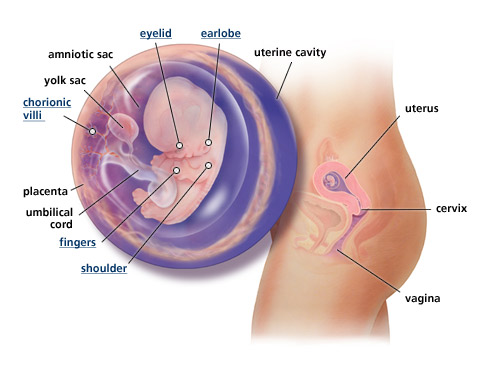
At 9 weeks of pregnancy, it is now 49 days since your baby was conceived, so you are now starting week 10. Scientists no longer refer to your baby as an embryo - they are now called a fetus (also spelt foetus), which is Latin for 'young one'.
Your baby now measures around 2.5 cm from crown to rump (1 inch) and the webbing between their fingers and toes has disappeared, creating separate digits. Your baby's nail beds are starting to form, but actual nails are not present until they are about 20 weeks gestation.
Your baby's heart has developed valves within their aorta and pulmonary blood vessels. These direct blood flow to and from their body and lungs, via their umbilical cord to your body. Their liver is now producing blood cells. This task will eventually be taken over by your baby's bone marrow, once their bones fully mature. Your baby's lungs are growing bronchi tunnels, which will eventually transport air after they are born.
Your baby's elbows, knees, wrists and ankles are developing. Their bones are initially soft and flexible (made of cartilage) and muscle tissue has begun forming between their skin and bones. Their neck is more developed, allowing them to slightly lift and turn their head! They may even be able to touch their own face with their hands - the beginnings of thumb sucking!
Your baby's ovaries or testes are now well developed. However, both sexes look the same at this early stage because their external sex organs are just beginning to form.
Physical changes
Headaches
Some women experience frequent headaches during early pregnancy. These may be caused by hormonal changes and/or the normal increase in blood volume circulating (up to 50% more). Adjusting to a new pregnancy can also be a stressful time, causing tension headaches. If you are prone to headaches or migraines, you may notice you do not experience them as often during pregnancy, or you may find they tend to be worse.
Dizziness
Some women feel light-headed during pregnancy, or even physically faint. In the Victorian era, fainting was an unsophisticated way of telling if a woman was pregnant! Fainting and dizziness is common and happens because your blood vessels naturally relax and dilate under the influence of the progesterone hormone, lowering your blood pressure. Fainting is not usually a problem, just a little embarrassing if you do it in public!
Emotional reactions
As your pregnancy progresses, you may feel your sexuality has changed. Some women notice a rise in their libido, others a definite decline. You may also notice your partner's libido changing. How you and your partner feel about making love together during pregnancy can affect your relationship. Depending on your expectations, your individual feelings may deepen towards each other, or perhaps place an added strain.
Your pregnancy - Week 9
Products
Happix Premium Mini
Happix Premium Midi
Happix Premium Maxi
Happix Premium Junior
Pregnancy
Prenatal Care
First Trimester
Second Trimester
Third Trimester
Pregnancy Problems
Pregnancy Safety&Care
Birth
Pre Labour
Induction of Labour
Stages of Labour
Caesarean Birth
Normal Birth
Baby
Newborn Baby List
Newborn Needs and Care
Feeding Your Baby
Baby Development
Parenting
Becoming a Parent
Being a Positive Parent