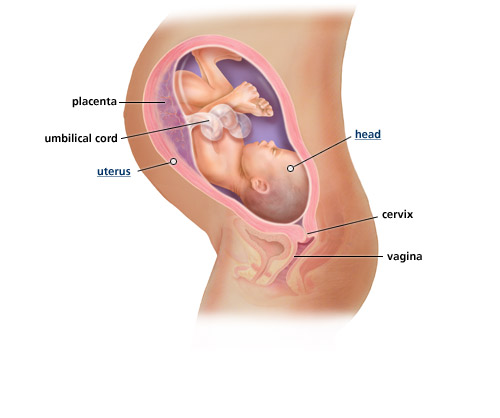
You are now 36 weeks pregnant, which is the beginning of week 37.
Babies around this gestation are on average around 48 cm long (18.9 inches) and weigh approximately 2,850 grams (2.85 kg or 6lb 5 oz).
Your baby is now in normal proportions. Up until about 36 weeks their head size is larger than their belly size, but by 36 weeks this equalises and from now on, their belly size is larger than their head. At 36 to 37 weeks your baby's lungs are fully mature. However, babies of diabetic mothers can have delayed lung maturity until about 38 to 40 weeks.
Going on maternity leave? Don't forget to update your email address by using the form at the bottom of this email. This way you can keep informed during your pregnancy and baby's first year.
Physical changes
Tiredness and insomnia
It is normal to feel tired and not sleep well during the final weeks of pregnancy, perhaps waking frequently because of pregnancy discomforts or needing to urinate. Lack of sleep can be quite distressing, although it is generally Mother Nature's way of preparing your body to care for your new baby!
Emotional reactions
Relationships change to some degree when having a new baby. Your relationship moves from being just the two of you (or perhaps an addition to be three or four) - learning about each other, falling in love, accepting each other's idiosyncrasies and qualities, exploring what works and changing what doesn't. The same process happens when you have a new baby and it will take time to adjust. Keep talking and communicate how you are feeling.
Birth preparations
Early recovery after Caesarean
For women who have a caesarean, recovering from this major operation is often a concern. The early days will require pain relieving medications and you will be encouraged to get up and move around within the first 24 to 48 hours.
4th stage of labour
Overview
The 4th stage of labour is the 1st hour following the birth of the baby and expulsion of the placenta. It is the time that the woman's body stabilises and the baby fully adjusts to life outside the womb. A time to rest, eat and drink for the mother, for the baby to feed, be checked, weighed and measured. It is also a time to take photos, freshen up, ring friends and relatives and perhaps have some form of celebration!
Physical recovery
The process of labour and giving birth is extremely hard physical work and emotionally demanding at times. How the woman physically recovers and feels during the 4th stage of labour will depend on how long or short the labour was, what type of birth she had, if there were any complications, if she had pain relief and how the baby is after the birth.
Emotions
Every woman reacts in a different way emotionally after the birth. As does every partner and support person. It is not uncommon to have feelings of excitement and joy, mixed with sheer relief and exhaustion that she has "done it" and the baby is here.
Support strategies
The hour after birth is a special, exciting time, full of mixed emotions and physical readjustment for the woman. After completing the amazing task of giving birth, she is still in need of physical and emotional support. She may instigate this support herself or be a little overwhelmed, needing her partner or support person to help meet her needs.
What to expect from your caregiver
Besides getting to know your new baby, the time after birth can involve some interventions and monitoring.
Your pregnancy - Week 36