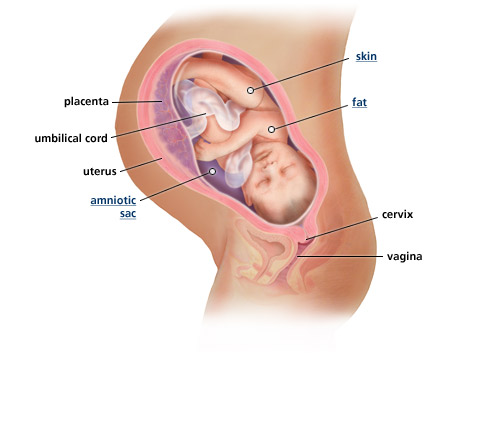
You are now 39 weeks pregnant, which is the beginning of week 40.
With around one week to go, your baby will be born soon (if not already!) During the next week, most of the thick, greasy vernix cream on your baby's skin goes away but there may be remnants left in their armpits and groin. Their fingernails now look long and manicured and their skin is supple.
Your baby's breathing exercises naturally stop about 24 to 48 hours before labour commences. Unborn babies have around 75 to 100mls of amniotic fluid in their lungs (aprox. 25 mls per kg of body weight). During labour, hormones are released to trigger your baby's system to absorb some of this fluid into their blood stream. A small amount remains in their lungs at birth, which is fully absorbed within 24 hours. This is why newborns often sound a little gurgly when they breathe during the first hour or so after birth.
If you do not experience labour (i.e. an elective Caesarean) there is an increased chance your baby will experience a condition called wet lung, where they tend to breathe more rapidly, possibly requiring observation in the intensive care nursery for a few hours.
If your baby is born around this time congratulations! If your baby has not arrived as yet - try and be patient and remember that the normal length of a pregnancy is any time from 37 to 42 weeks.
Baby at birth
Physical recovery
The early weeks after giving birth are a time for the woman to learn, heal and recover. It is very common to have aches and pains to varying degrees, and you will usually feel sore, swollen and tender, especially if stitches were needed after a vaginal birth, or your baby was delivered by caesarean.
Emotional highs and lows
Most new mothers experience a range of emotional highs and lows in the days and weeks following the birth of their baby. These not only stem from the normal hormonal changes, but also the sheer physical, emotional and spiritual experience of giving birth. Emotions will be very different for each individual woman and if this is not your first baby, you may experience similar feelings to your previous birth/s, or they could be completely different.
Women who have had a caesarean (and their partners) may also experience unique emotions, in addition to the normal postnatal adjustments.
Support strategies
During the early weeks of mothering most women require the same physical and emotional support, and unconditional love, that was needed during the pregnancy and birth. Some women pre-plan certain support strategies for this period, as well as rely on partners, family and friends (if these are available).
What to expect from your caregiver
For most women, the first few days after the birth are spent in hospital. However some women choose to go home early. For women having a home birth, they are already there! Where you spend your early postnatal recovery will determine the type of care you receive and how long your professional support continues, before relying on community services, networking, family and friends.
Your pregnancy - Week 39
Products
Happix Premium Mini
Happix Premium Midi
Happix Premium Maxi
Happix Premium Junior